
Results Snapshot
• Eliminated a major line-of-fire hazard from wellhead bracing operations
• Reduced installation time from ~1 month to 1–2 weeks
• Minimized civil works and overall project costs
• Improved wellhead integrity management and operational safety
• Delivered a scalable solution for oil and gas assets across Australia
Driving Safer, More Efficient Wellhead Operations
In high-risk oil and gas environments, eliminating line-of-fire exposure is not just a safety priority; it’s a critical operational requirement.
This case study highlights how Redback Drilling Tools and Manufacturing partnered with our client to challenge a conventional wellhead bracing approach by engineering out risk through smarter design.
By focusing on real-world operational challenges in the Cooper Basin, the solution not only improved safety outcomes but also delivered a more efficient, scalable way to manage wellhead integrity across remote and asset-intensive operations.
Eliminating Line-of-Fire Hazards Through Design
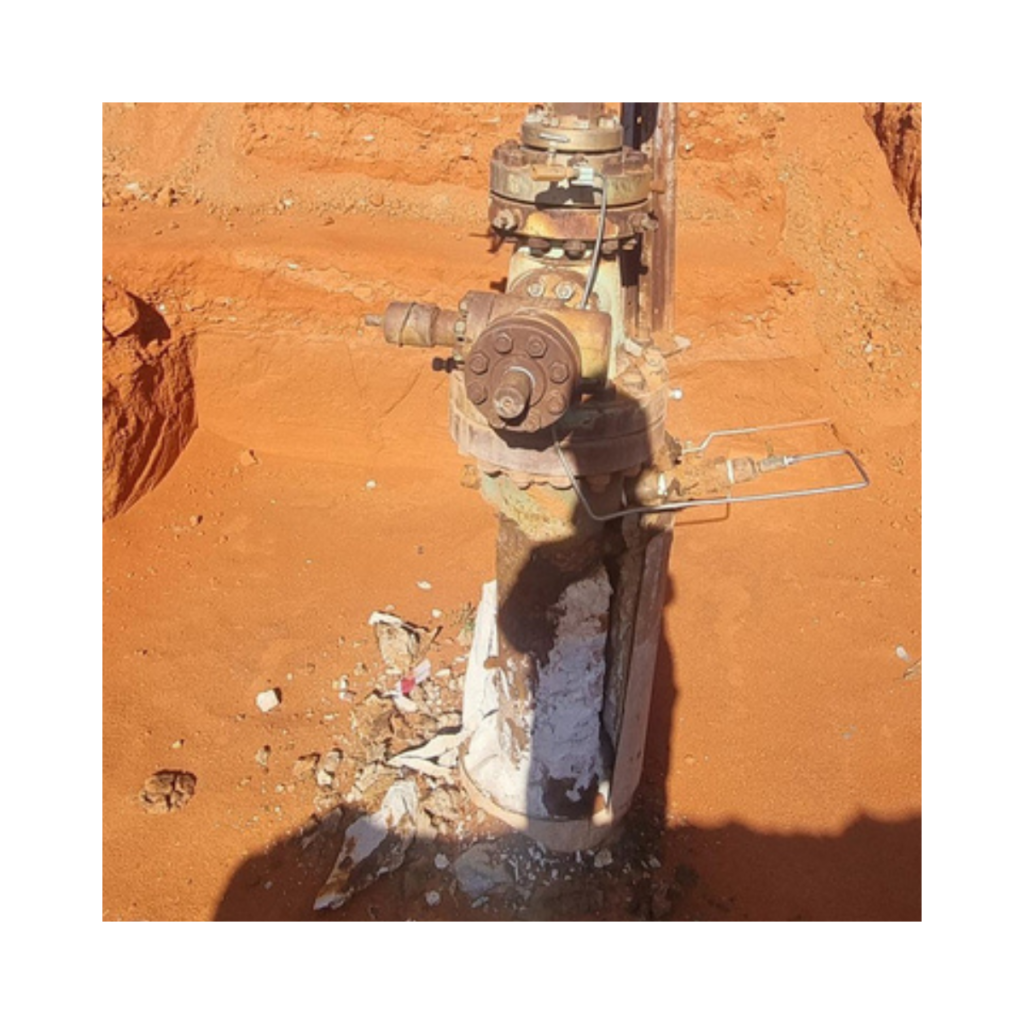
Eliminating Line-of-Fire Hazards through Design is a custom-engineered wellhead bracing solution developed to address critical safety and operational challenges.
Working closely with our client, the Redback engineering team applied a practical, problem-solving approach to understand the risks inherent in traditional wellhead bracing and identify a safer, more effective alternative.
By redesigning the conventional method, the team developed a compact, high-capacity brace that supports the casing spool directly removing the need for conductor pipe removal.
This approach not only resolves a site-specific challenge but also addresses a broader industry's need, demonstrating how engineering-led solutions can eliminate risk while improving efficiency across oil and gas operations.
Designing Out Risk at Its Source
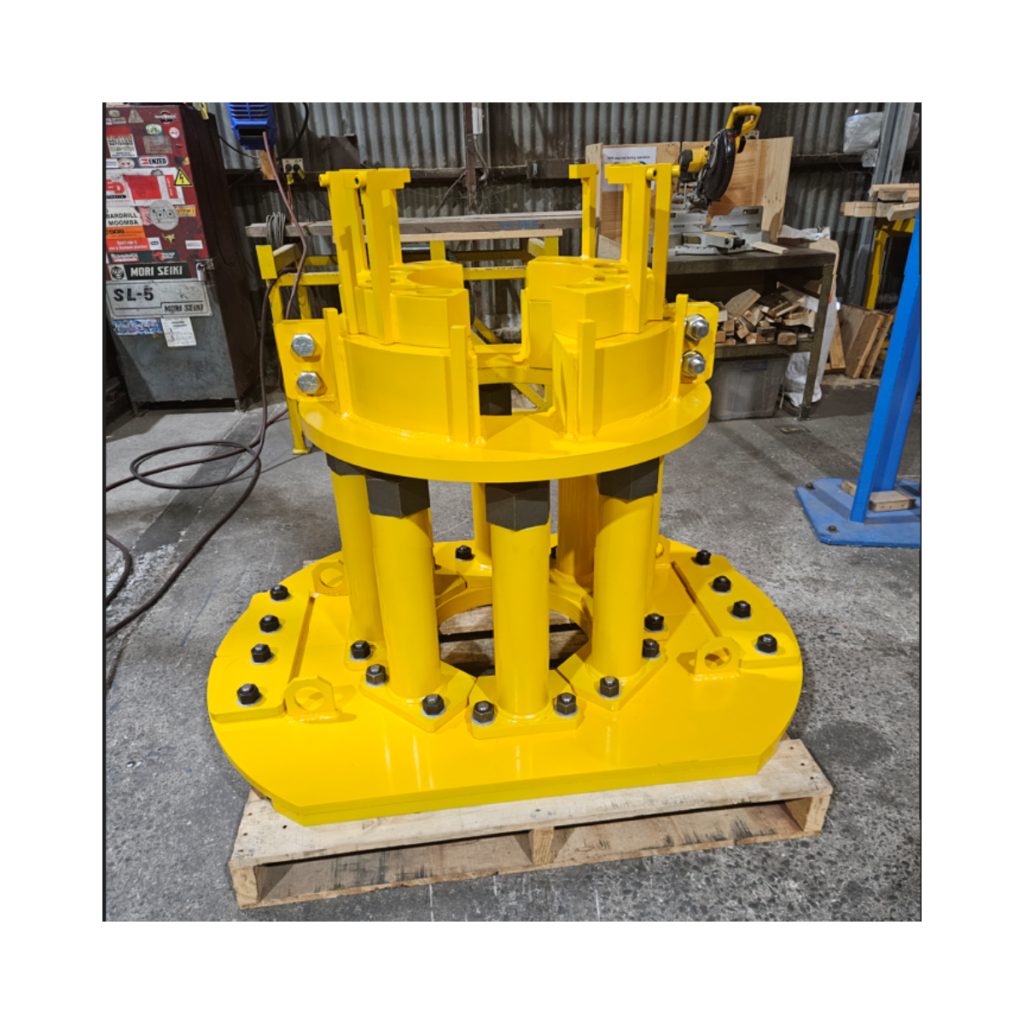
Line-of-fire hazards remain one of the most significant safety risks in upstream oil and gas operations in Australia and globally.
Historically, these risks have been managed through procedural or administrative controls but are rarely eliminated entirely.
This project reflects a shift towards engineering-led risk elimination. By removing the hazard at its source, rather than managing exposure, the solution aligns with the highest level of the hierarchy of controls, setting a new benchmark for safer intervention practices.
Solving a High-Risk Legacy Challenge in the Cooper Basin
In Australia’s Cooper Basin, wellhead subsidence caused by casing corrosion requires bracing to maintain structural integrity.
The conventional approach required cutting and removing the conductor pipe to install a collar-based brace, an activity that exposed workers to significant line-of-fire risks, particularly during cellar excavation.
This method also:
• Increased subsidence risk
• Extended installation timelines (up to one month)
• Required extensive civil works, adding cost and complexity
The redesigned brace eliminates the need for conductor removal entirely, by removing the primary source of risk while significantly reducing project scope, time, and cost.
Engineering the Solution Through Collaboration
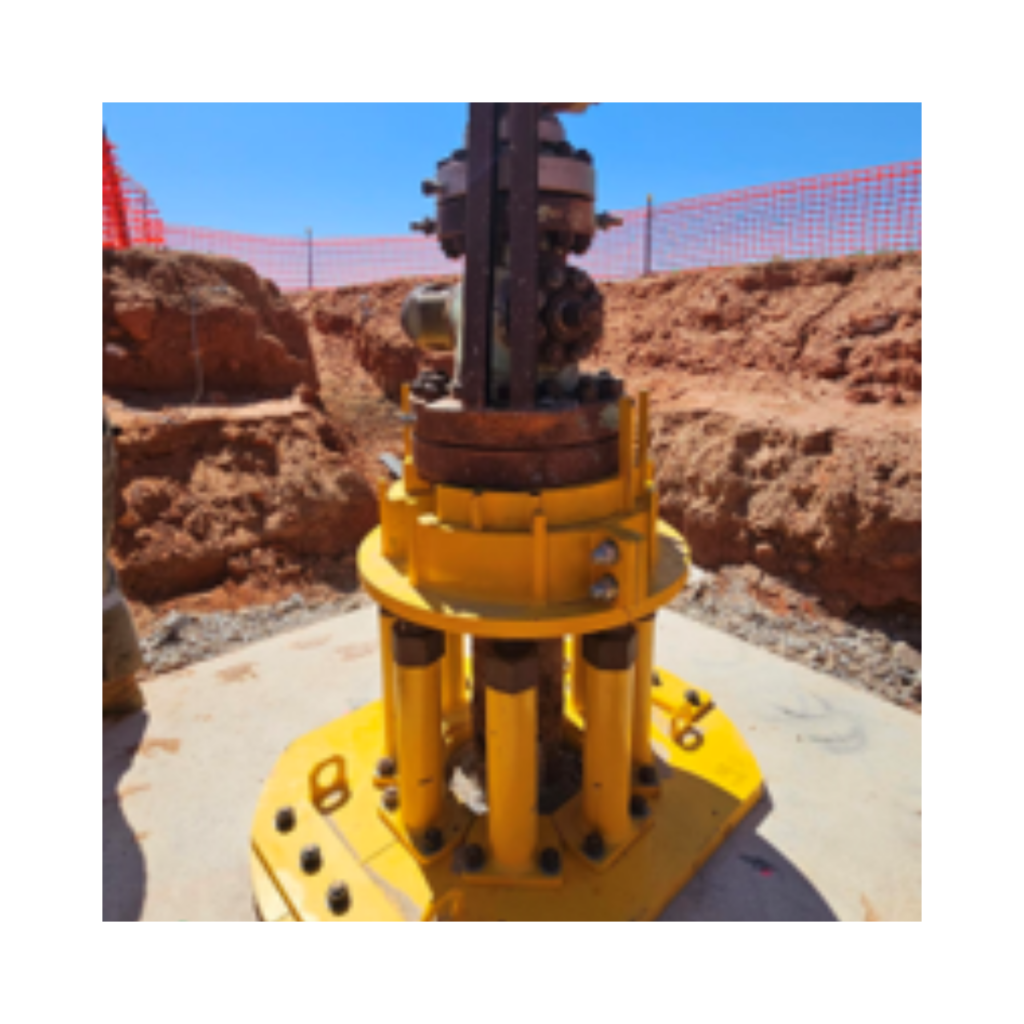
Delivering this solution required more than design, it demanded collaboration, iteration, and real-world validation.
Over a two-year period, Redback and our client worked together to refine the concept through multiple design iterations. Early concepts were tested against operational constraints, including torsional loads, installation feasibility, and field conditions.
A critical milestone was the pilot installation at a subsidence-affected operational site. This provided a real-world test under challenging conditions, with learnings from field execution directly informing final design improvements.
Balancing a high load capacity (200T) with a compact footprint, while maintaining installation simplicity was a key engineering challenge successfully addressed.
Delivering Measurable Value Across Safety and Performance
The final design incorporates a rotating base plate and vertical support legs, allowing the brace to stabilise the casing spool directly without conductor pipe removal.
This delivers measurable improvements across safety, operational performance, and cost efficiency:
• Eliminates a major line-of-fire exposure, improving workforce safety
• Reduces installation time from approximately one month to 1–2 weeks
• Minimises civil works and associated costs
• Simplifies installation, reducing operational complexity
The design is also adaptable across conventional oil and gas assets,—making it a scalable solution for wellhead integrity challenges across Australia and similar operating environments.
From Local Challenge to Industry-Wide Impact
What began as a response to a specific Cooper Basin challenge has evolved into a solution with broader industry relevance.
By removing high-risk activities and simplifying execution, the design enables:
• Safer worksites with reduced exposure
• Less time spent in hazardous environments
• More predictable and efficient project delivery
For operators, the benefits are immediate-shorter timelines, reduced reliance on heavy civil works, and improved cost efficiency without compromising safety or performance.
Engineering Innovation Recognised Nationally
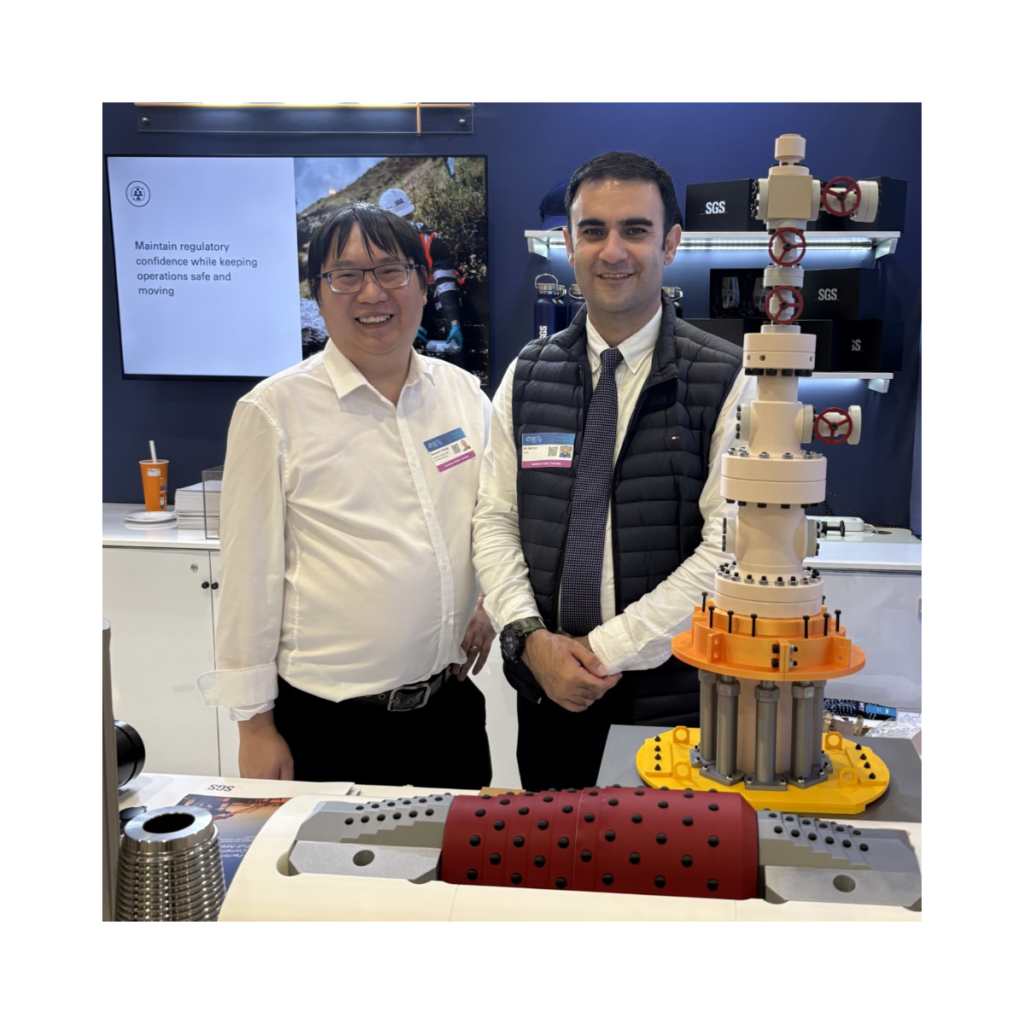
This solution was showcased at the Australian Energy Producers Conference 2026, where a 3D model of the wellhead brace design was presented at the SGS/Redback stand.
Submitted into the AEP Innovation Awards, the project was recognised as a Top 3 finalist highlighting its impact as a practical, real-world engineering innovation in Australia’s energy sector.
For Redback, this recognition reflects a commitment to delivering solutions that are grounded in operational need, eliminate risk through design, and create measurable value for clients and the broader industry.
Redback Drilling Tools & Manufacturing